
Mike Clare said the sale of Dreams closed at 11 p.m. on a Friday. He announced it the following Monday, cleared his office and walked away from the bed retailer he had spent two decades building. Clare separately recalled that he and his wife Carol paid off their mortgage the day after the sale. The transaction had made a formidable sum of money available and removed the need to turn up for work. In a later interview, he remembered the less straightforward part: he did not know what to do with the rest of his life.[1–2]
Clare began by spending time away from the business. The couple travelled, bought a larger home and spent some of the proceeds. Clare later admitted buying a Rolls-Royce he came to regret. After several months of leisure, the novelty diminished. In 2010 he told MoneyWeek he had been bored after roughly a year. He then invested in properties that posed difficult refurbishment and operating questions: castles, coastal forts and an old monastery.[2][3]
Dreams had begun on a different scale. Clare had worked his way through the furniture trade before opening his own shop in Uxbridge in the mid-1980s; the Dreams business dates its start to 1987. He sold beds during the day, delivered them in the evening and dealt with the accounts on Sundays. Over the next two decades, Dreams grew to more than 200 stores and added its own manufacturing capacity. By the time of the sale, he had learned to negotiate leases, manage staff and oversee a national retail brand. He had also built a routine around doing so.[4]
What was sold, and what remained
Exponent Private Equity bought control of Dreams in March 2008. The consideration is less tidy than the retrospective headlines suggest. A 2013 Evening Standard account gives £222 million, while Management Today reported £230 million in 2009. A 2010 buyout survey put the transaction at £227 million. These are published deal figures, not reconciled cash proceeds, and the publicly accessible reports do not supply an acquisition agreement establishing precisely how enterprise value, debt and rolled equity were treated.[5–7]
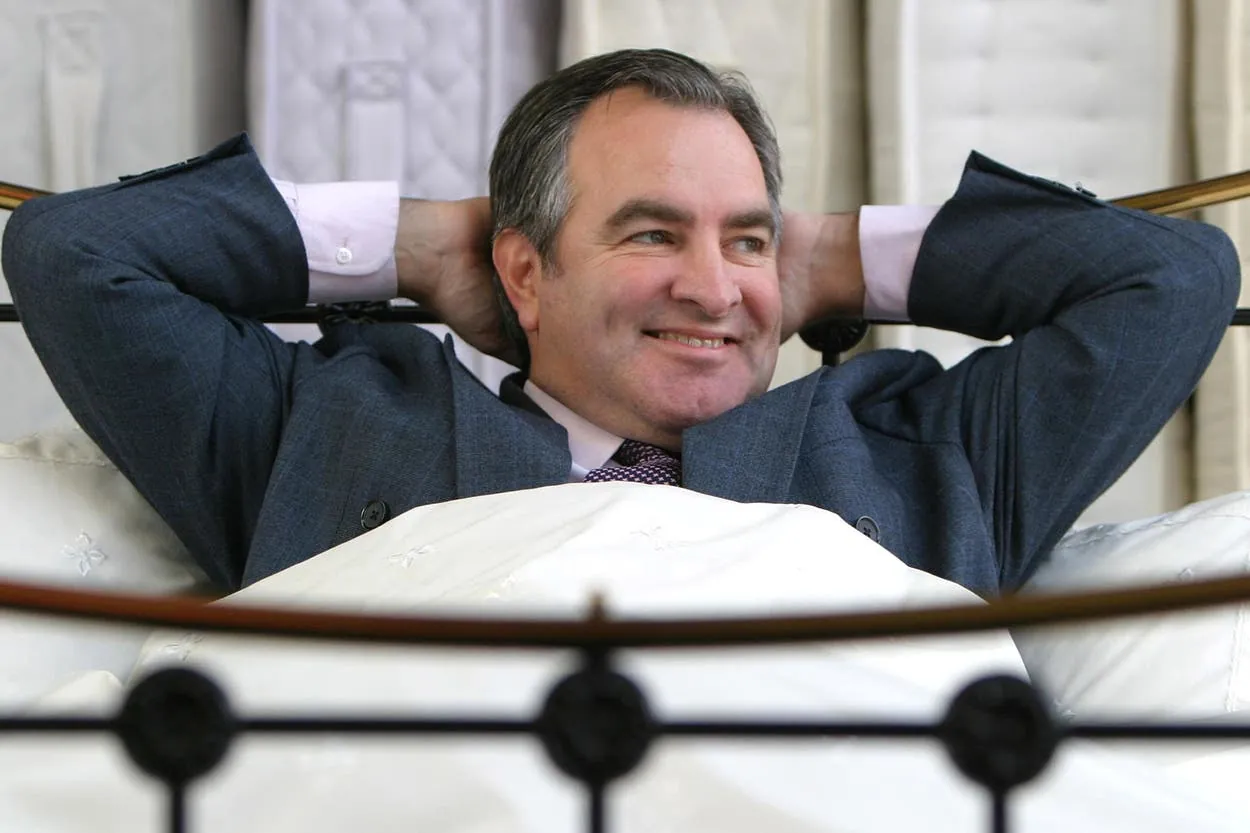
Clare also kept money in Dreams after relinquishing control. Management Today reported that he reinvested £20 million, was said to retain about 25% and continued as non-executive president. The first figure describes money put back at risk, not an additional amount received. The 25% was a contemporary report of an interest after the transaction, not a verified schedule of shares. When The Independent reported on the retailer's troubles in 2013, it referred to Clare's remaining 10% stake. The record consulted does not reconcile the two percentages or identify the transactions, dilution or changes in structure, if any, between them.[6, 8]
Leaving daily management did not eliminate Clare's financial exposure or interest in the retailer. Exponent had the controlling position and the responsibility for capital allocation. Clare no longer ran stores, recruited managers or chose sites. He retained a reported minority financial exposure and an advisory title, while the business still employed people he knew. Without the complete contracts, the precise limits of his governance or any post-sale restrictions cannot be described with confidence. The reported transaction price should not be mistaken for his personal net worth or for cash free of reinvestment and tax.
When Dreams ran into trouble, Clare could bid for the business but could not direct its rescue. By early 2013 the retailer had expanded to approximately 265 stores and was burdened with debt. Clare, backed by Apollo, entered the bidding to regain control. He was competing against other investors in a process run for lenders, rather than exercising a right to take the company back. In March, Dreams was sold out of administration to Sun European Partners in a transaction reported at £35 million, largely comprising debt. Clare's bid did not win. Roughly 171 stores and two factories transferred, while around 95 sites were left outside the rescue.[8–9]
The appeal of a difficult building
Clare's new work initially seemed remote from beds. Through Clarenco and the AmaZing Venues businesses, he and Carol assembled historic properties to refurbish and hire out for weddings, corporate events and private gatherings. The portfolio included Scottish castles, a former Benedictine monastery at Stanbrook Abbey in Worcestershire and Victorian sea forts in the Solent. Carol worked on the interiors. Unlike a personal country house, each building had to earn revenue, attract customers and meet the obligations of a functioning hospitality venue.[10]
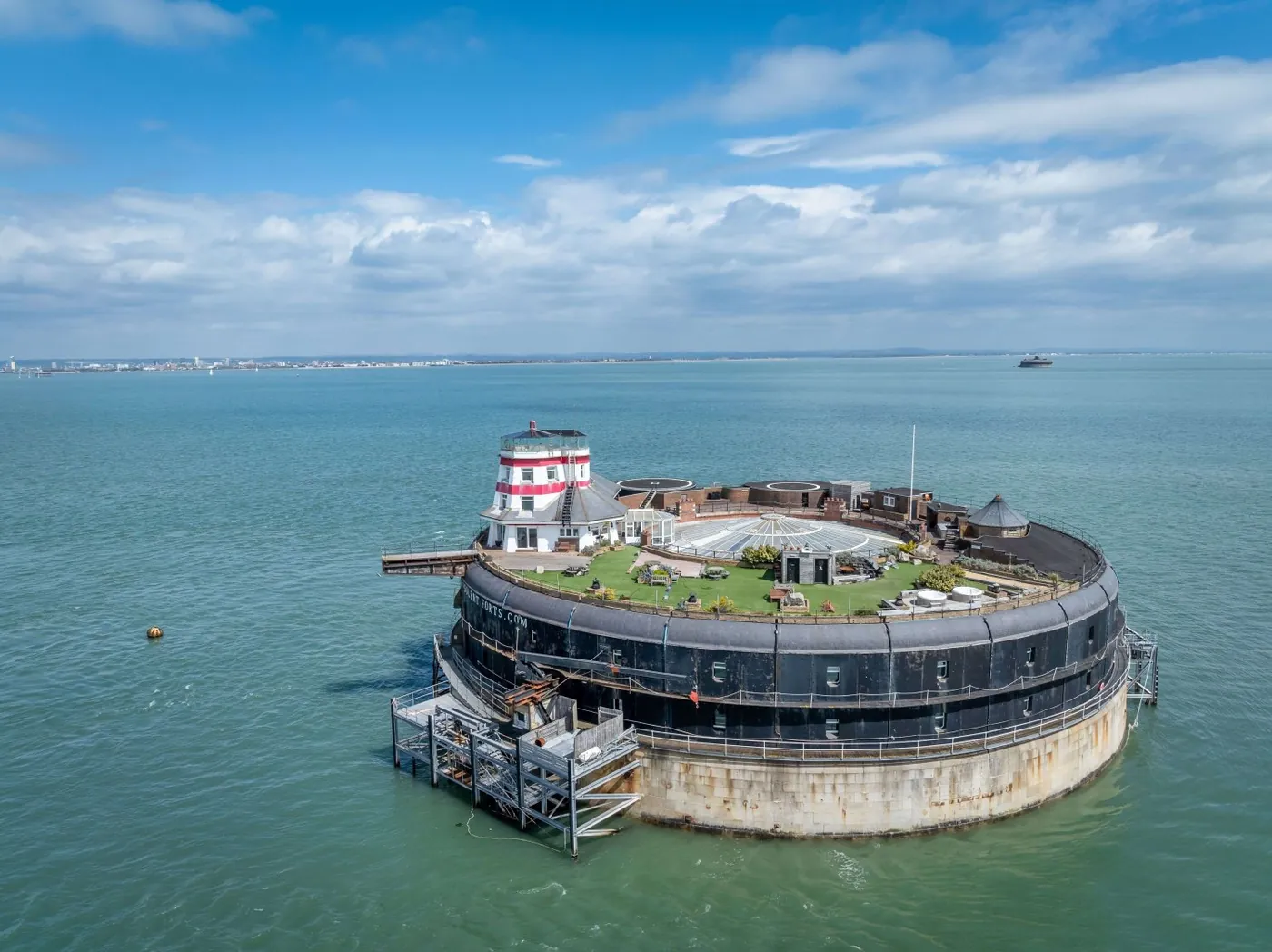
In 2012, Clare was discussing plans to add 52 bedroom suites at Stanbrook Abbey, converting former nuns' rooms into accommodation. He also spoke about turning one sea fort into a museum and another into a hotel and restaurant. Clare said the unusual buildings were part of the appeal because they gave guests a reason to make a special trip. Yet the operating questions were familiar. How much should be spent before opening? What will guests pay for? Can a distinctive experience be marketed repeatedly without losing its character?[10]
In a 2014 interview conducted for Smith & Williamson, Clare described the challenge of building another brand around properties that were unusual and difficult to value. He said the work was more fun than his job at Dreams. His account centred on the work of building the hospitality business, beyond the novelty of the properties. At Dreams, he had turned ordinary products into a recognizable chain. At the venues business, he was trying to make extraordinary properties behave like saleable, repeatable experiences.[2]
Clare was again making operating decisions, this time for individual properties instead of a national retail chain. A monastery with dozens of bedrooms involves refurbishment schedules, staff, financing, bookings and guests; a fort adds transport and maintenance issues. The properties were deliberately idiosyncratic, so the repeatability of a bed-store roll-out could not be assumed. The same 2014 interview put the portfolio's estimated value around £50 million. That estimate was not proof of realised proceeds or a return on invested capital.[2]
The retailer he could not forget
His interest in buying back Dreams exposes the limits of describing the castles as a clean replacement. Clare told the 2014 interviewer he still felt responsible for the company and knew many of its people. Dreams remained his creation even though he had neither the controlling votes nor, after the 2013 sale, the ownership position to direct its recovery. He could create unusual venues from scratch, but he could not choose Dreams' buyer. That decision belonged to the creditors and the administrators running the process.[2][9]
After losing the bid, Clare publicly discussed launching a new bed retailer to compete with his former company. A pledge to open hundreds of stores is not evidence that such a chain materialized. The firmer evidence of his eventual return is smaller and later. In 2024 and 2025, he appeared alongside former Dreams chief executive Nick Worthington and furniture executive Greg Suthern in a new bedding business, 100% Comfort. Its offering centered on pillows, mattress toppers and related sleep products, using the founders' existing industry relationships.[11]
The new venture put Clare back in the bedding market. The shops had been sold, and the 2008 transaction was long complete. Dreams later changed hands again. Yet Clare could still work with people from the same industry, selling to a market whose habits he understood. On his own website, he describes the historic properties as having passed into new hands and speaks of semi-retirement. He also lists his subsequent involvement in bedding. Both accounts can be true: he stepped away from one operation while continuing to seek decisions worth making.[12]
Clare's account describes a specific problem after the sale: leisure did not replace the decisions and relationships of running Dreams. Clare wanted freedom from a national chain's daily responsibilities and obtained it. He also wanted access to the people, customers and judgments that had given that work its meaning. Castles offered one answer; a failed bid for Dreams offered another. Seventeen years after the sale, the business he chose to work on again was still concerned with how people sleep.
Original exhibit / The Second Act
Two ventures, one enduring industry.
The change in legal ownership was immediate. Clare's attachment to the business and the people behind it was not.
Sources: Clare's accounts [1–4, 12], contemporary transaction coverage [5–9] and the 2025 bedding-industry interview [11]. Retained equity levels were reported estimates, not verified beneficial-ownership filings.