
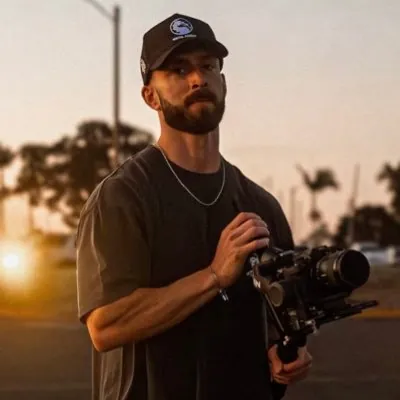
A few years after selling his watch company, Jake Kassan bought a camera and started filming ordinary things, including flowers. There was no client waiting for the footage and no marketing department asking for revisions. The former chief executive of MVMT, a business built on knowing exactly what would sell online, was learning a craft whose commercial destination he could not yet describe. He recalled this unlikely beginning in a February 2025 conversation with the 505 Podcast.[5]
Before filmmaking came the sale of MVMT. In October 2018, Movado Group completed its acquisition of 100% of MVMT, the direct-to-consumer watch brand Kassan had founded with Kramer LaPlante in 2013. The announced initial consideration was $100 million, subject to adjustments, with as much as another $100 million contingent on future performance. The figures describe the company transaction, not what Kassan personally received. The public filings do not establish his individual net proceeds.[1–2]
For Movado, MVMT offered access to digitally acquired watch customers. Launched with an online crowdfunding campaign, it avoided much of the traditional watch industry's wholesale distribution in favour of selling directly to consumers. Its inexpensive, design-conscious products travelled through social platforms and digital advertising. In 2017, the company reported approximately $71 million in revenue, according to Movado's acquisition announcement.[1]
The business had also changed Kassan's work. In a 2025 interview, he remembered the appeal of the earliest years: sitting at his parents' dining-room table, working beside LaPlante, making creative decisions and seeing results almost immediately. Later came staffing, forecasts and the demands of leading a growing organization. He could appreciate the size of what they had built while being less interested in the daily job it had created. By his own account, the change in what he enjoyed about the job preceded the acquisition.[5]
The ownership clock
Movado signed the purchase agreement in August 2018 and closed on 1 October. It bought the company's equity, not simply its intellectual property or an operating division. The structure included purchase-price adjustments, escrow arrangements and payments connected to employee options and bonuses. Movado's closing filing also describes cash used to retire MVMT debt. The headline $100 million should therefore not be read as an unqualified deposit into the founders' accounts.[2]
The second half of the advertised price was even more conditional. The agreement set two earn-out measurement periods, from February 2019 through January 2021 and from February 2021 through January 2023. The formulas linked possible payments to revenue above a $100 million annual benchmark and to brand-level EBITDA above a $10 million annual benchmark, using different percentage weights in each period. The combined contingent consideration was capped at $100 million. It was an incentive mechanism, not money already earned.[3]
The earn-out tied part of the advertised purchase price to MVMT's results through January 2023. The buyer controlled the business, subject to the contract's operating covenants and protections against deliberately frustrating the earn-out. Sellers had an economic interest in subsequent results without retaining the authority that came with ownership. The agreement also imposed five-year non-competition obligations on the founders. Employment, commercial discretion, competition restrictions and contingent consideration were related, but legally distinct, questions.[3]
Movado's subsequent disclosures provide the outcome. By the fiscal year ended January 2020, the company had reduced the estimated value of the contingent consideration to zero amid performance below the assumptions underpinning the original estimate. When the final earn-out period expired on 31 January 2023, no additional consideration was payable. These are transaction facts. They do not demonstrate why Kassan felt unsettled, or even precisely when his priorities changed.[4]
The working-life clock
Closing did not remove Kassan from the company's org chart. Movado publicly said that he would remain chief executive and that LaPlante would continue as chief operating officer, leading the Los Angeles team. A 2019 interview with Kassan still found him talking about the brand's future and the value of remaining close to its customers. Kassan remained the public face of MVMT after Movado took ownership.[1, 6]
His later account suggests that the adjustment was neither instant nor entirely contractual. On the 505 Podcast, Kassan said he stayed for a couple of years as planned. When the pandemic arrived, he left his operating role. He described a period of working out, spending time with friends and playing games. He did not present it as a disciplined sabbatical with a defined next project. He had the financial means to stop working before he knew how he wanted to spend his time.[5]
There is a limit to what can be reconstructed. The public releases establish that he stayed in charge at the 2018 closing and remained engaged in 2019. His 2025 recollection places his departure around the beginning of the pandemic, but the available record does not establish the precise date of his last employment obligation or map every responsibility across the first twelve post-sale months. The available evidence does not establish when all of his contractual commitments ended.
His discomfort was also specific. By his account, people he encountered in Los Angeles still wanted to talk about MVMT. For them, it was a concise description of who he was. For Kassan, it was increasingly a description of what he had already done. He moved to San Diego, partly to put some distance between his next decisions and the social environment that kept returning him to his former company. He did not immediately replace it with another consumer brand.[5]
He considered another venture, but said he was reluctant to repeat the e-commerce model. Kassan told the podcast he had considered what a subsequent business might look like, but had little appetite for repeating the e-commerce model. MVMT's early work had felt like building something from instinct and experimentation. Running a mature company involved a different set of responsibilities. Building another watch-like brand merely to recreate a founder title would not necessarily recover the part of the job he had enjoyed.[5]
Original exhibit / The Second Act
One exit. Three timelines.
Ownership, operating responsibility and contingent economics moved on different schedules.
Sources: Movado's SEC filings [2–4] and Kassan's retrospective account [5]. His departure timing is approximate, not a reported contract termination date.
The freedom to choose, without a brief
The camera offered something that did not demand a return to the role he had sold. Kassan could decide what interested him, learn by making mistakes and judge a result without an entire company waiting on it. Early footage of flowers and experiments with a drone developed into a more sustained interest in filmmaking and YouTube. By February 2025, he was living in Australia and talking about projects that required creative attention rather than another fundraising round or a large staff.[5]
None of this demonstrates that selling was a mistake. The acquisition transferred the financial and managerial risks of MVMT to an established operator, subject to the agreements the parties signed. It gave Kassan scope to step away from a business he had outgrown in some respects. But the sale price measured ownership in an enterprise. It could not measure which tasks had supplied his days with their sense of progress, or assign a value to no longer doing them.
In a March 2026 interview with Dylan Mullan, the publicly available episode description returned to the same practical problem: scaling the company had drawn Kassan away from creative work, while financial success did not supply a replacement purpose. That is a later description of his experience, not independent proof of a single cause. It is consistent, however, with the distinctions already visible in his more detailed 2025 account.[7]
The acquisition agreement defined the financial obligations on a schedule. His subsequent creative work had no comparable timetable. Movado could specify ownership transfer, accounting definitions, non-competition and the conditions for an additional payment, with dates and remedies attached. Kassan could choose a camera, a place to live and a story to tell, but there was no contract defining when those choices would become satisfying. Movado closed the acquisition in October 2018; Kassan was still exploring filmmaking in 2025. The sale allowed him to choose work without immediately committing to another consumer business.