
In December 2023, Zoë Foster Blake was negotiating a return to control of Go-To Skincare. Two years earlier, she had invited a larger beauty group to take majority control and help Go-To expand internationally. Now that buyer, BWX, was in administration, and the founder was part of a transaction to recover its stake. The proposed buyback drew on founder investment, Go-To's own cash and potential new borrowing. The return of founder control would come with new financial commitments.[1][2]
News reports put the December arrangement at A$21.8 million. They separately identified A$8 million of share purchases by Foster Blake and A$500,000 by co-founder Paul Bates. Reporting based on the transaction also described approximately A$4.5 million of retained earnings and a A$10 million loan at Go-To. Those numbers should not be added indiscriminately to construct a supposed A$23 million purchase price: they describe different financing and share transactions, and the complete settlement waterfall is not public in the sources reviewed.[2][3]
A founder-funded buyback and a company-funded buyback have different financial consequences. An investment by an individual changes that investor's exposure. Spending corporate cash reduces resources available for other purposes. Borrowing adds repayment and covenant obligations, even if it returns the voting power that makes future decisions possible.
The sale that left a founder inside
Go-To began in 2014 as Foster Blake's attempt to make skincare less intimidating. The former beauty editor brought language, product judgement and a direct relationship with consumers. Paul Bates, Stefan Drury and Peter Lehrke supplied technical and commercial expertise. The company sold Go-To products alongside Bro-To for men and Gro-To for children, with a business model shaped by its own online store and selected retail partners.[4]
BWX's August 2021 investor announcement disclosed A$36.8 million in revenue and A$11.6 million in normalised EBITDA for Go-To's 2021 financial year. Its own website accounted for 63% of revenue and Australian beauty retailer Mecca for another 30%. BWX was acquiring a brand that already generated most of its revenue through Go-To's site and Mecca. These were seller-supplied transaction-period measures, not a promise of future growth.[4]
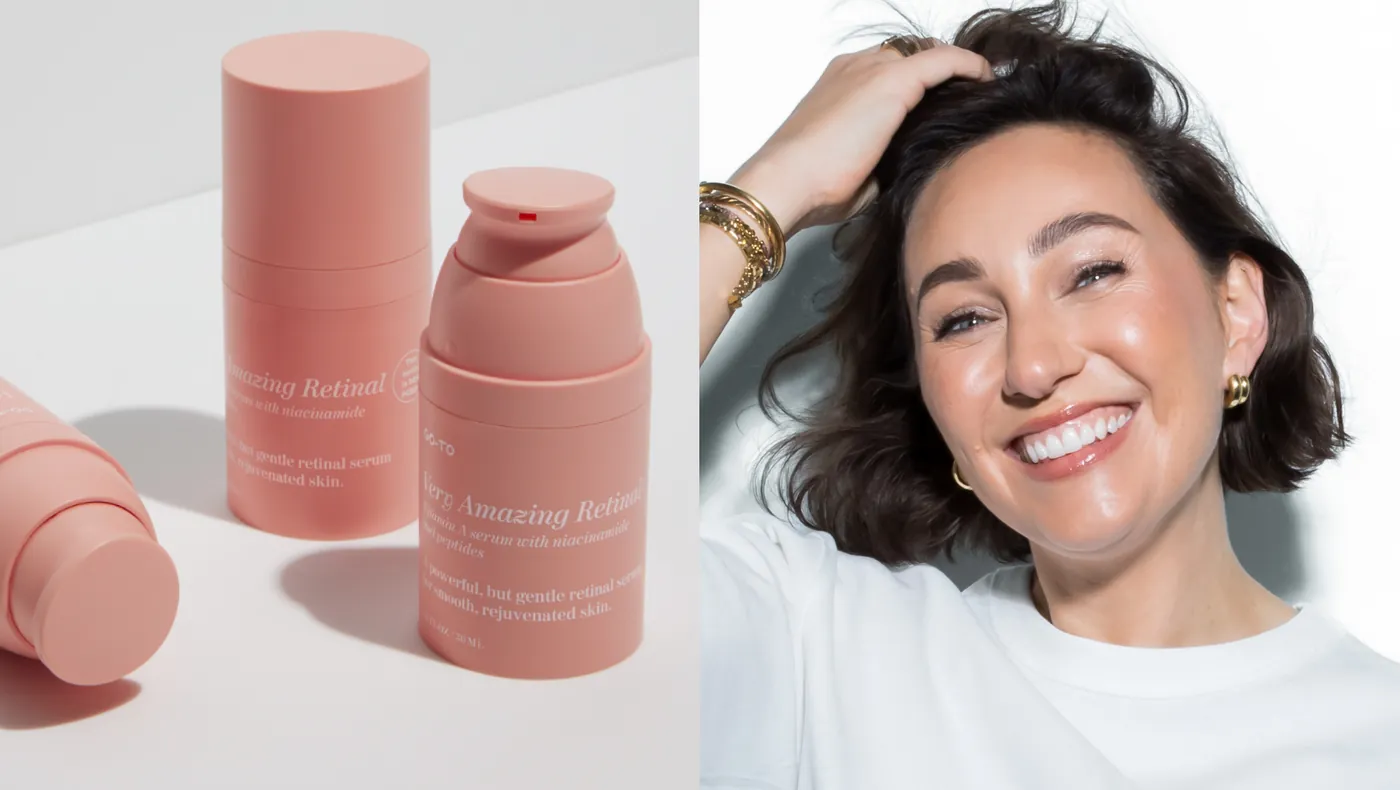
On 27 August 2021, BWX announced an agreement to purchase 50.1% for approximately A$89 million, describing a 100% enterprise value of A$177 million. The deal closed on 30 September. BWX's later audited accounts put the final consideration at A$89.494 million, including deferred consideration and working-capital adjustment. Neither number is Foster Blake's personal payday: four original shareholders sold shares, and individual proceeds are not established by these consolidated company disclosures.[4][5]
The buyer raised equity to help finance the acquisition. The founders retained a collective 49.9% and Foster Blake remained Chief Creative Officer, a director and a strategic shareholder. CEO Brad Dransfield and the operating team were expected to continue running the brand independently, using BWX's reach for procurement and overseas distribution. The team could operate the brand separately, subject to BWX's majority ownership.[4][6]
Foster Blake later explained her preference for a partner over an emergency capital injection. International growth was expensive, she told Mamamia, and she wanted experienced people around the table. BWX seemed to offer scale without requiring the brand to abandon its voice. She was seeking capital and distribution capacity while retaining an active role in Go-To. She continued building Go-To after the shares changed hands.[7]
The contract that outlived the buyer's plan
The remaining ownership was not passive. BWX's original announcement disclosed put and call options beginning in the third year and on subsequent anniversaries. Its 2022 financial report added a sharper condition: minority holders could put their shares back to BWX following certain major board decisions passed on a casting vote against Foster Blake's opposition, or otherwise from September 2024. These terms gave the retained shareholders a potential exit route while creating a contingent funding obligation for the majority owner.[4][5]
BWX recognised a A$89.2 million put-option liability at acquisition, subsequently marked at A$59.2 million as of 30 June 2022. That A$59.2 million was an accounting estimate of the potential redemption amount, not proof of a guaranteed minimum cheque in 2024. The value depended on the company's estimated worth and the option's terms. Its existence nonetheless meant the 2021 partnership carried the prospect of another substantial capital requirement.[5]
Then the buyer's finances deteriorated. BWX's Australian businesses entered voluntary administration in April 2023 and receivers began selling assets. Go-To itself was not part of that administration. Its management described separate treasury and cash-flow arrangements, and the brand kept trading. What had become distressed was its majority shareholder, not automatically the operating company or its customers' orders.[8]
The distinction between BWX's insolvency and Go-To's operations appeared in the May 2023 court record. In May 2023, a Federal Court decision recording the administrators' evidence noted both BWX's 50.1% holding and discussions between the receivers, Foster Blake and her advisers about a possible sale. The court was extending the administration process to allow orderly asset sales; it was not approving a specific price for Go-To. For the founder, however, the change in negotiating counterparty was real. The group that had promised scale now needed a disposal that could help its creditors.[9]
BWX's receivers had to negotiate a sale of Go-To's controlling stake while the founders remained minority shareholders. The founder has information about the brand and a strong personal reason to protect it. The receivers have a duty to pursue recoveries, not nostalgia. A prospective third-party bidder faces a minority ownership structure, an established management team and pre-existing option arrangements. None of those facts guarantees the founder a bargain, but together they make the price of control a matter of negotiation rather than a simple reversal of the original sale.
Control returned, but capital still had a price
The December 2023 arrangement returned Go-To to founder-led ownership. Contemporary reporting placed Foster Blake's post-transaction stake at 59.68%, including a separate share acquisition earlier in 2023. KPMG restructuring partner Gayle Dickerson described the result as a return of control to the founder; the reported transaction also involved Bates and other existing shareholders. It was not Foster Blake personally acquiring 100% of the business.[1][2][3]
The share transactions and the funding sources answer different questions. A$8 million measures the founder's reported new share investment. A$21.8 million describes the wider reported arrangement to remove BWX's interest. The cash drawn from Go-To's retained earnings and the proposed corporate loan identify how that change in ownership was to be financed. The available reports do not reproduce loan maturities, security packages, covenant definitions or a complete reconciliation of consideration and financing. It would be irresponsible to infer that all listed numbers represent additional payments by the founder.[2][3]
Likewise, the gap between the 2021 majority-stake price and the 2023 outcome is not a clean estimate of how much Go-To deteriorated. The first was an acquisition of control by a solvent strategic buyer expecting procurement and distribution advantages. The second occurred during a creditor-led realisation of assets at a collapsed parent, in a company with minority shareholders and earlier exit obligations. Different funding arrangements and changes in the buyer's bargaining position prevent a simple like-for-like valuation conclusion.
A reported 59.68% stake restored Foster Blake's ability to direct Go-To's strategic priorities. She no longer had to align Go-To's future with the strategic priorities and solvency of a majority shareholder. The brand could decide its own product focus and capital allocation. Yet ownership does not remove obligations to employees, suppliers, retailers or lenders. If the reported loan was drawn, a future cash-flow claim would sit alongside those operating needs. A founder can reacquire a voting majority and still have less financial freedom than the ownership chart suggests.
Foster Blake's next ownership transaction concerned the company she had already founded. Foster Blake did not leave one company to start an unrelated venture. She stayed close to the one she had built, discovered how a partner's distress could reshape her own options, and then helped finance its return. The first transaction exchanged majority control for scale. The second exchanged fresh capital and possible leverage for autonomy. Control returned with new commitments of founder capital and potential corporate borrowing. The terms of regaining control deserve as much scrutiny as those of selling it.
Original exhibit / The Second Act
Ownership moved twice. The obligations moved with it.
The rows separate shares, day-to-day roles, contractual rights and financing. Where the private 2023 documents have not been published, the limits are explicit.
Sources: BWX ASX release and financial accounts [4–5], administration evidence [8–9], 2023 reporting based on buyer and receivers' statements [1–3]. “Superseded or resolved” is an inference from the announced ownership outcome, not a claim about undisclosed termination language.