In a September 2026 conversation with David Senra, Peter Rahal described the delay involved in becoming an investor. A founder can hire someone or change a product and see the consequences quickly. With a minority investment, he said, years could pass before results showed whether he had made a good decision. After selling RXBAR, Rahal tried the second kind of work. It offered freedom from employees, production problems and daily decisions. He found the distance from the business difficult to tolerate.[1]
At Litani, Rahal analysed consumer brands and met their founders. He could suggest an improvement without authority to implement it. In the interview, he described looking for deals and allocations as work he did not enjoy. He preferred making product and hiring decisions to reviewing plans he could not implement himself.[1]
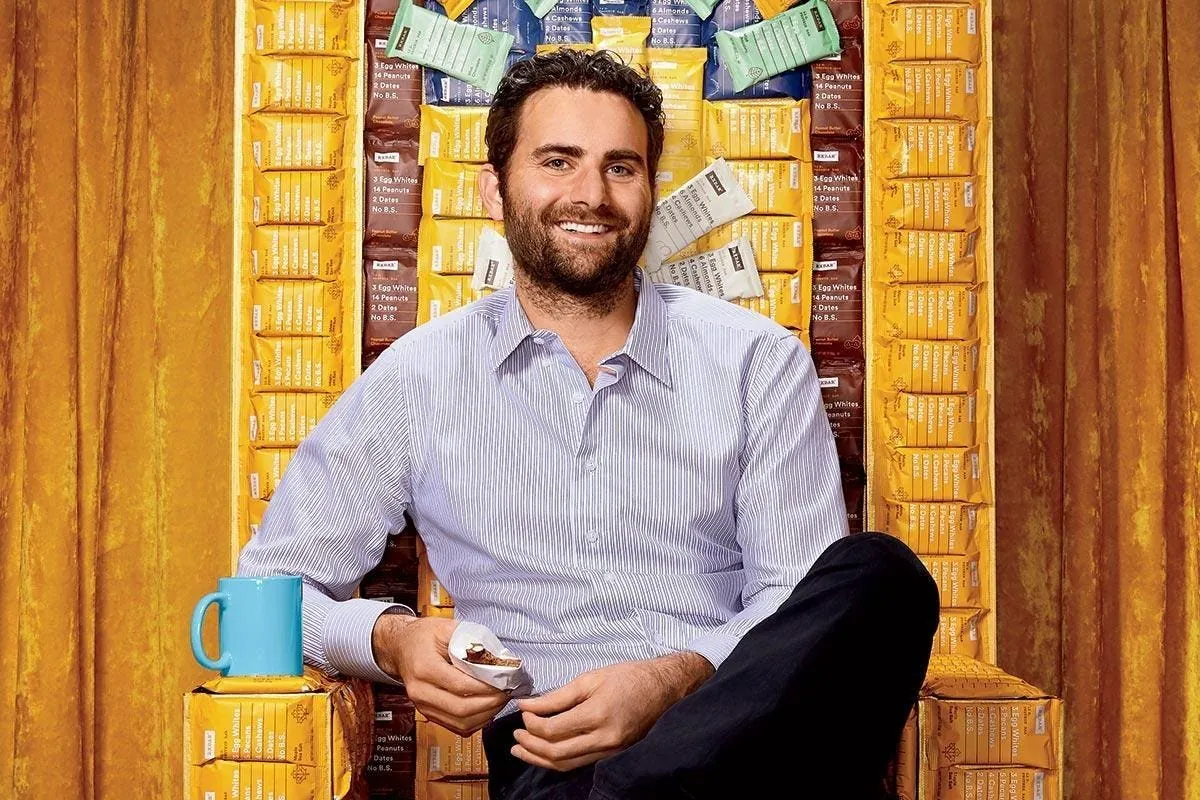
RXBAR had rewarded that attention. Rahal and his childhood friend Jared Smith started making protein bars in 2013 with a modest personal investment, first selling through CrossFit gyms. Packaging listed core ingredients in blunt language, giving the brand a recognisable place in a crowded category. Four years later, Kellogg was willing to pay $600 million for their company. The RXBAR sale gave him capital to invest, but owning minority positions offered a very different working life from running a company.[2][4]
What the $600 million bought
Kellogg announced the acquisition in October 2017, as its traditional cereal business faced pressure and the company sought faster-growing snack categories. It bought Chicago Bar Company, the business behind RXBAR, rather than one brand's trademark in isolation. The buyer forecast about $120 million in RXBAR net sales for 2017 and argued that its distribution reach could accelerate growth. Those figures were part of an acquisition thesis, not evidence that the post-deal expansion had already happened.[2]
The transaction closed on 27 October 2017. In its annual filing, Kellogg described a $600 million acquisition cost, or $596 million after subtracting the cash and cash equivalents acquired. Its original announcement had also mentioned approximately $400 million after projected tax benefits, an entirely different measure of the buyer's expected economic cost. These three numbers should not be confused. The annual filing also said the price was subject to working-capital and net-debt adjustments and that Kellogg used short-term borrowings to fund the acquisition.[2][3]
For the portion of 2017 after closing, Kellogg reported $27 million of sales and less than $1 million of operating profit attributable to the acquisition within its North America Other segment. That is a short ownership period, not full-year RXBAR profitability. In the preliminary allocation, goodwill was valued at $375 million and intangible assets, primarily brands, at $201 million. Much of what Kellogg paid for was therefore the brand, distribution opportunity and earnings capacity it expected to develop, rather than factories or inventory alone.[3]
None of this determines Rahal's personal proceeds. Senra introduced his 2026 interview with an assertion about the co-founders' collective ownership, but the reviewed acquisition filing does not provide a founder-by-founder cap table. Forbes later estimated that Rahal received roughly $230 million after tax. That remains a journalistic estimate, not a verified settlement statement. The terms of any employment, transition or restrictive covenants were not attached to the buyer's annual report.[1][4]
Freedom, with a waiting period
Rahal remained associated with RXBAR for a period after Kellogg's acquisition and left the brand in 2018, according to his later account reported by Forbes. He moved from Chicago to Miami and began organising a family office, Litani. His investment interest was concentrated in consumer products, where he believed he could recognise useful products and promising founders. At Litani, he spent more time meeting founders and assessing companies than managing products himself.[4][1]
Investing let him select founders but removed the responsibility to resolve production failures, manage staff or test reformulations. Rahal disliked waiting years to assess investments after years of working with shorter product-development cycles. This is a subjective explanation, not a measured comparison of returns from Litani against operating. The public record does not establish a complete annual history of the family office's investments or realised outcomes.[1]
There was also a contractual constraint. Rahal told Senra that his non-compete ended on 6 October 2022, and Forbes described a five-year restriction associated with the Kellogg sale. The date he recalled is three weeks before the fifth anniversary of the documented 27 October 2017 closing. The discrepancy cannot be resolved without the agreement, which could have used an earlier signing or effective date. Its product categories, territory, exceptions and enforcement provisions are not public in the materials reviewed. It would be unsafe to conclude that he was prohibited from every food venture for precisely five calendar years.[1][4]
He did not announce a new bar immediately after the reported expiry. Rahal described considering areas outside food before accepting the value of his product knowledge. He wanted to understand a product well enough to fix it himself. Developing unfamiliar technology would have forced him to delegate that judgment. Returning to food offered him competence where a decision turned into a physical product.[1]
A familiar product, a different company
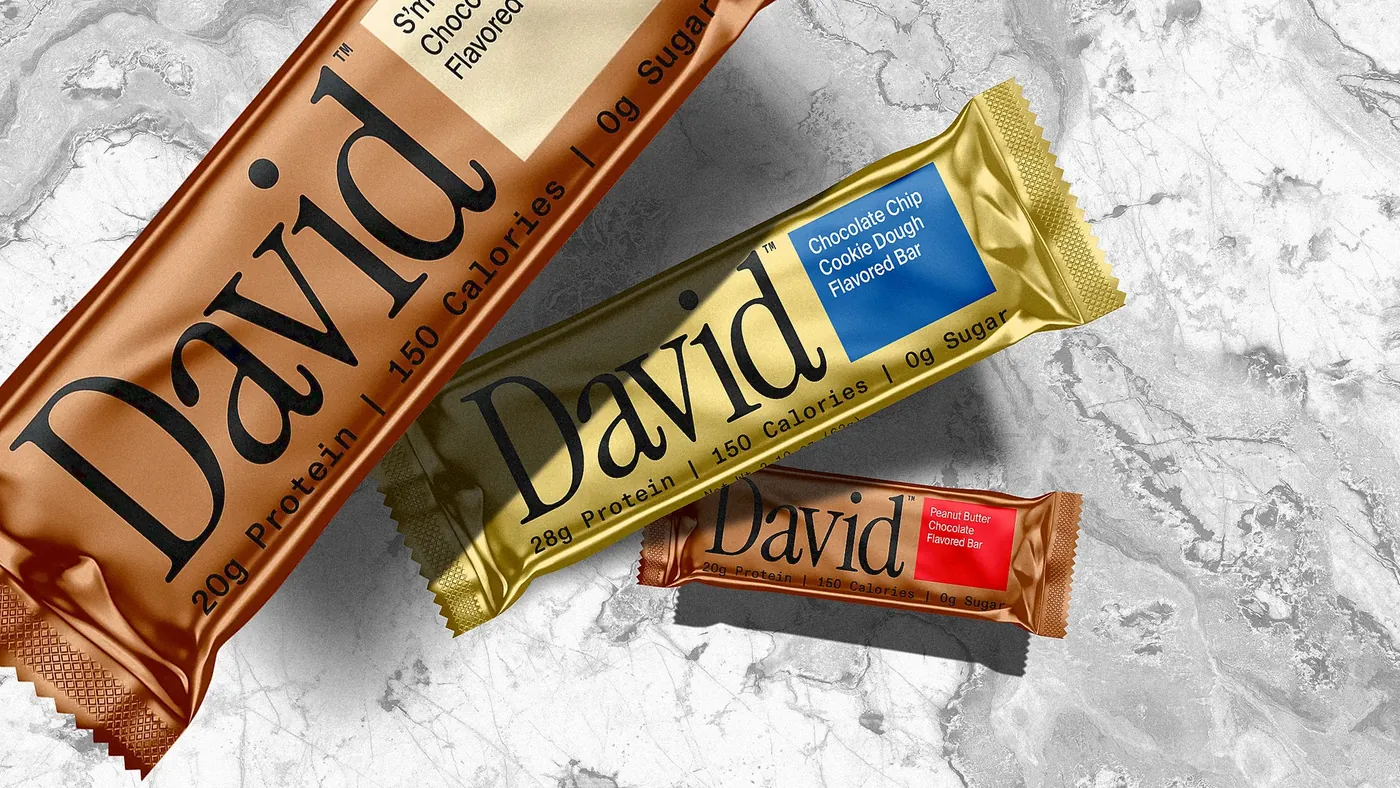
David launched direct-to-consumer in September 2024 with a protein bar positioned around a high protein-to-calorie ratio. Rahal and co-founder Zach Ranen were building a new company, not reviving RXBAR or reclaiming its assets from Kellogg. The bar was the initial product, while the parent, Medici Brands, was designed to apply product development, brand-building and distribution to several food categories. By 2026, its portfolio included David and the HallPass confectionery business; the company had announced plans for another consumer brand, Rowdy.[4][5]
Medici was designed to develop multiple brands using shared operating capabilities. In his first business, a protein bar created the entire commercial identity. In Medici, Rahal argues that a bar can be the first channel through which a broader organisation acquires customers, develops supply relationships and tests a repeatable brand-building process. His September 2026 interview gives considerable attention to recruiting former founders and treating the organisation itself as something to be designed. He had returned to decision-making, but sought to avoid being the single person responsible for every detail as the company grew.[1]
The 2025 purchase of ingredient supplier Epogee put that approach to a more contentious test. Medici acquired Epogee, a supplier of the EPG fat-replacement ingredient used in David products, in 2025. Rahal said his business had become heavily dependent on Epogee's output and wanted more certainty over supply. Other customers disputed the consequences of the acquisition, including access to the ingredient. The decision demonstrates how an operating founder can regain control over a crucial input while imposing costs or competitive disadvantages elsewhere. It is a supply-chain strategy, not proof that the resulting business is defensible at any price.[1][6]
In September 2026, Medici announced a $250 million Series B financing led by Greenoaks and Valor Equity Partners, with other investors including Rahal. Contemporary reporting and Rahal's confirmation to Inc. placed the company's valuation at $2.25 billion. The announcement described David as sold in more than 35,000 retail locations and on track to exceed $300 million of revenue in 2026. The store count is company-reported distribution; the revenue figure was a forward-looking target, not audited full-year sales. The parent-company valuation was the price implied by an equity financing, not a realised exit or evidence of net income.[5][7]
Rahal told AgFunderNews that he expected David to be profitable in 2026, while acknowledging that the new capital would finance further product lines and brands. Expected profitability is a management view until results substantiate it. The company must still navigate food manufacturing, retailer bargaining power, consumer preferences and the risks of tying multiple products to a differentiated ingredient. The more categories Medici enters, the further its organisation moves from the simple bar-business model Rahal knew how to operate at RXBAR.[8]
Rahal left passive investing to regain direct influence over products, staffing and suppliers. He tried allocating capital through other operators, then rebuilt a position where he could influence hiring, supply and product decisions directly. Yet the scale he now wants introduces its own delay: a group of brands can raise capital and open thousands of retail doors long before its long-run economics are clear. At Medici, he can make those decisions himself. The economic consequences, including whether the group can justify its financing valuation, will still take time to establish.
Original exhibit / The Second Act
From choosing founders back to making decisions.
A documented chronology of control, constraints and operating feedback. Reported restrictions are not treated as verified contract clauses.
Sources: Kellogg filing [2–3], Rahal's September 2026 account [1] and Medici disclosures and reporting [5–8].