

Rakuten wanted Kobo's management team for the long haul. Michael Serbinis remembered the buyer floating retention arrangements that contemplated something like a decade. He was not prepared to promise ten years of his life. He also objected to retention payments that rewarded managers merely for remaining on the payroll. He wanted his team to participate in the value it would create after the sale. Rakuten, he recalled in a Mixergy interview, accepted a different approach.[1]
Rakuten was buying every Kobo share for $315 million in cash. A wholly owned subsidiary would have no ordinary minority shareholders left. Yet Serbinis described a fresh arrangement allowing the founding team to participate economically in future growth. The precise instrument was not released. It would be wrong to call it retained Kobo equity, options or an earnout without the contract.[1][2]
The cash price compensated existing shareholders. Serbinis still needed a reason for his team to remain during international expansion. A fresh incentive might help, as might remaining in charge. Neither would give Serbinis permanent control over the owner's decisions.
Kobo had begun within Canadian bookseller Indigo in 2009 and was spun out as a separate company. Serbinis and the Indigo team were building a reading platform, not simply an electronic gadget. Its proposition to publishers and booksellers was that an open digital store, apps and devices could help them retain customers who might otherwise move to Amazon's Kindle ecosystem. That required distribution agreements across countries and a reliable supply of e-readers in shops.[2][1]
Why a competitor needed a larger balance sheet
Device inventory put Kobo's growth under financing pressure. In his account, Kobo ordered devices before receiving proceeds from retailers, exposing the business to manufacturing commitments, inventory and holiday demand. Borders, both an investor and a retail partner, went bankrupt in 2011. At the same time Apple and Google were expanding their digital-books ambitions. Serbinis said Kobo raised a $50 million Series C, but demand for the next season exceeded the working capital he had anticipated. These are founder-reported pressures, not audited cash-flow figures.[1]
Serbinis said he considered further financing and an initial public offering, but neither route could meet the immediate funding need. A growing business could run out of funding capacity when every device required cash months before sale. Kobo needed a partner to underwrite expansion while the contest with Amazon remained unresolved.[1]
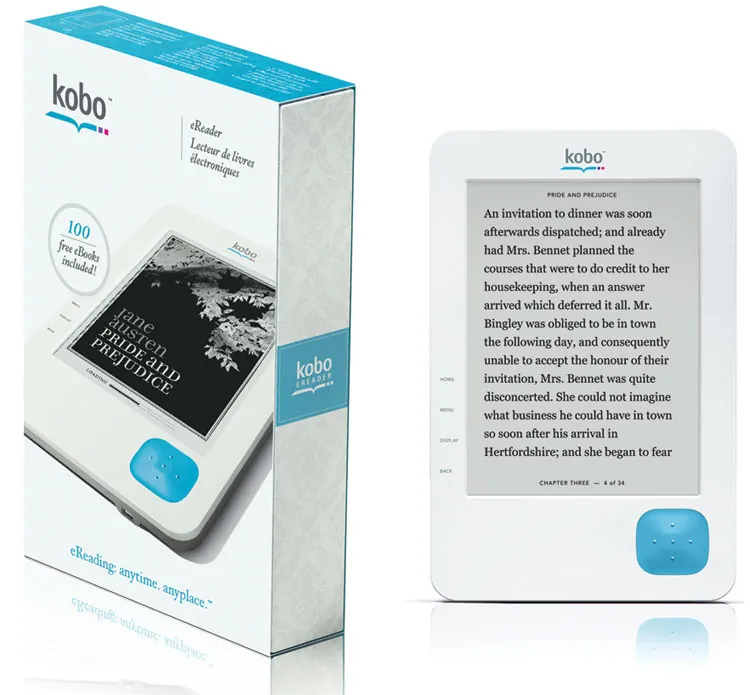
Rakuten announced the agreement in November 2011. The Japanese buyer wanted an international digital-content business to complement its e-commerce properties, while Kobo would gain access to retail networks and capital. The announcement said the Toronto headquarters, management and employees would remain in place. Rakuten nevertheless held ultimate authority over Kobo after closing.[2]
The deal closed in January 2012 after Canadian regulatory approval. Rakuten confirmed it had acquired 100% of outstanding shares. Indigo, the retailer that had incubated Kobo and remained a substantial shareholder, reported receiving $146 million based on its fully diluted interest. That is a disclosed seller receipt, unlike Serbinis's personal outcome. In the Mixergy interview he said he held slightly less than 10% before the sale. The exact class, dilution mechanics, taxes and his eventual net proceeds have not been established in the reviewed documents.[3][4][1]
Rakuten's 2012 annual report described Kobo expanding into additional countries and reaching 12 million cumulative users by year-end. Those are buyer-reported measures, not a valuation of management's incentives. They document platform growth, not profitability or its cause. A founder's upside agreement depends on its calculations, payout rules and protections when control changes.[5]
Remaining in charge is a temporary condition
Serbinis stayed to lead international expansion in the years after the sale. Rakuten could control budgets, leadership and priorities. Serbinis's recollection does not establish his veto rights or the milestones for his team's reward.[1]
In February 2014, Serbinis left the chief executive role. Rakuten executive Takahito Aiki succeeded him, and contemporary reporting described Serbinis moving to a vice-chairman position. The available announcement did not establish a dispute with Rakuten or a failure of the incentive structure. It showed that the company could change its top executive after the sale, whatever understanding had existed about entrepreneurial continuity.[6]
Serbinis linked his departure to the demands the company had placed on family life. Kobo had taken him across a web of publishers, hardware suppliers and booksellers, and he had spent extensive periods away from home. He had three daughters, the youngest born shortly after the acquisition. He took time to travel and pursue sports with his family, joking about his personal summer off. This was a break from exhausting work, not public evidence that he had abandoned the ambition to build another business.[1]
His departure does not establish what happened to economic participation. Public sources do not say whether it vested, paid out, expired or was renegotiated. Negotiating for potential upside and receiving it are different events. Confirmation would require the agreement or testimony from the parties.
From booksellers to healthcare organisations
Healthcare did not appear as a secret plan inside the 2011 sale. Serbinis said an encounter with a presentation by surgeon and entrepreneur Patrick Soon-Shiong prompted him to question why digital services concentrated on treating illness rather than helping people stay healthy. In a later first-person account, he recalled attending an event with Jack Dorsey in early 2014 and beginning a document of startup ideas. One described a personal-finance-style interface for health data. His recollections identify influences, not a single independently documented moment of invention.[1][7]

League was incorporated in 2014 with former colleagues among the founding team. At launch it was intended as a consumer service for finding, scheduling and paying preventative-health practitioners, with health information connected to the booking experience. A contemporaneous account reported a $4 million seed round backed by OMERS Ventures and others. The first product thesis relied on consumers choosing to engage with their health before facing a serious medical problem, a different demand test from selling an e-reader to an existing book customer.[8]
The commercial proposition subsequently changed. Serbinis wrote that League's original marketplace evolved towards software that healthcare organisations could use to build their own customer experiences. A later agreement with Loblaw's Shoppers Drug Mart illustrates this model: League supplied technology for a consumer-facing health service operated by a large established distribution partner. League did not acquire the retailer or become its healthcare provider. It sold infrastructure to a business with users and offline relationships of its own.[7][9]
The two businesses eventually adopted a similar distribution approach. In digital books, Serbinis supported incumbent retailers with technology, apps and a service their customers could use. In healthcare, League eventually offered software to incumbent healthcare groups rather than insisting that every customer adopt a stand-alone consumer marketplace. That resemblance is analytical, not proof he deliberately copied an acquisition strategy. The industries have different regulations, purchasing cycles and responsibilities for personal information. League's platform model required trust and contracts that e-book retail did not.
League has since disclosed substantial reach, but its member counts and forecasts are company-reported and not equivalent to profitable transactions or realised equity value. The customer relationship shaped the economics of both businesses. Kobo could sell direct through apps, but its international expansion also relied on established booksellers. League started by seeking consumers directly and ended up working through institutional partners. At League, the shift towards institutional distribution became a defining commercial decision.[7][9]
The Kobo negotiation was an attempt to make a founder's incentives survive a change of ownership. Serbinis remained in charge until Rakuten appointed a new chief executive in February 2014. His later business required a different kind of commitment: creating a new team, learning an unfamiliar industry and changing a product proposition when the original route to customers proved insufficient. Whether the post-sale Kobo arrangement paid him what he expected remains undocumented. He left Kobo, recruited former colleagues into League and eventually moved its product towards enterprise healthcare software.
Original exhibit / The Second Act
The asset, the role, and the next company.
The founder's leadership and economic incentives did not follow the same timeline as legal ownership. Unknown contractual terms are marked as such.
Sources: Rakuten, Kobo and Indigo transaction announcements [2–5], Serbinis interviews and account [1, 7], later corporate reporting [6, 8–9].