

On 30 August 2024, Outside announced that it had acquired MapMyFitness from Under Armour. The name was familiar: Robin Thurston, Outside's founder and chief executive, was also a co-founder of MapMyFitness. His company was buying software he had helped create and sold more than a decade earlier. Outside said the apps would join its mapping, content and membership businesses. The purchase agreement's terms were not disclosed.[1]
Thurston led the company acquiring MapMyFitness, but was acting as chief executive rather than a disclosed personal buyer. Under Armour sold the platform to Outside Interactive, a business with its own investors, employees and obligations. Public disclosures do not establish Thurston's ownership percentage in Outside or that he personally supplied the purchase consideration. His prior familiarity may have helped him understand the asset, but familiarity does not substitute for the acquiring company's investment case.[1][2]
Under Armour later disclosed financial figures that Outside had not published. Although Outside did not announce a price, Under Armour's subsequent financial statements recorded US$8 million of cash proceeds from selling MapMyFitness and a US$5.3 million net gain associated with the disposal. Those are seller accounting figures. They do not provide Outside's complete purchase agreement, its financing or a current valuation of all the platform's liabilities and commercial prospects. They do, however, put a disclosed cash-flow marker beside a transaction often described simply as undisclosed.[3]
The route that started as a cycling problem
Thurston's first version of the idea came while riding narrow roads in Europe in 2005. He had spent years in competitive cycling and later worked in finance. A friend wanted the routes for a future trip without requiring Thurston to accompany him. In a 2015 Under Armour presentation, he recalled imagining a way to share those roads before the smartphone made recording every ride ordinary. He subsequently met Kevin Callahan, who had independently built a similar tool for runners. Their projects came together as MapMyFitness.[4]
By 2013 the business offered MapMyRun, MapMyRide and MapMyWalk, with route planning and GPS workout logs. It also supported advertising, premium subscriptions and partner services. Under Armour's original announcement cited more than 20 million registered users, compatibility with more than 400 devices and sensors, and over 160 million routes. These were company-reported measures of platform reach and content; a registration was not evidence that someone exercised with the app every month.[5]
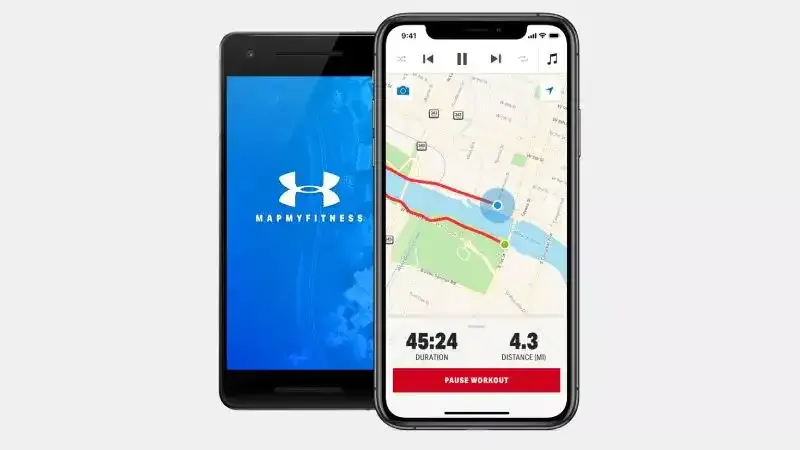
Under Armour wanted a relationship with athletes between purchases of shoes and shirts. MapMyFitness offered a way to learn how people trained, supply digital products and reach customers without waiting for their next visit to a retailer. The buyer's November 2013 release described a connected-fitness community. Its 2013 annual filing went further, saying that it expected the acquisition to support awareness and sales through wholesale and direct-to-consumer channels. Under Armour expected activity on the apps to support sales through wholesale and direct channels.[5][6]
Under Armour announced a US$150 million cash acquisition and completed the purchase of all outstanding MapMyFitness equity on 6 December 2013. Its completion filing reported US$148.3 million paid after estimated working-capital and other adjustments, subject to final reconciliation. The purchase was partly financed with a US$100 million draw on the company's credit facility. Those are company-level deal amounts, not Thurston's personal proceeds or an estimate of what each founder owned.[7][6]
The buyer expected value from MapMyFitness beyond its identifiable assets. Its initial purchase-price allocation placed US$122.2 million in goodwill, plus separately valued technology, brand name and customer relationships. Goodwill is an accounting residual after identified assets and liabilities, not evidence that every anticipated network benefit materialised. The strategic buyer was prepared to pay for expected opportunities beyond MapMyFitness's standalone balance sheet.[6]
Thurston stayed and became Under Armour's Chief Digital Officer. In 2015 he appeared alongside management and the founders of other fitness apps, discussing an enlarged digital group. The same operating proposition had grown into a portfolio that included MyFitnessPal and Endomondo. But he was now one executive inside a public apparel company. His authority to set technology priorities existed within Under Armour's wider capital-allocation decisions, not as an independent owner.[4]
Building an outdoor business around utility
Thurston left Under Armour in 2016 and became chief executive of Helix, a personal-genomics company, before returning to the outdoors. In 2019 he took control of Pocket Outdoor Media, whose titles included specialist cycling and endurance publications. It became a broader acquisition platform. In February 2021, after adding Outside's media properties, Gaia GPS and the athleteReg event-registration business, the group adopted the Outside name. Thurston was its chief executive, organising editorial brands, maps, events and membership under one roof.[12][8]

Outside's 2021 announcement explained the intended economics more clearly than a slogan about community. A reader might arrive for a cycling article, subscribe for premium content, use a map, register for a race and return for another activity. Each step could strengthen a paid relationship, if customers actually used several products. Outside described a US$99 annual membership, then called Active Pass, covering digital content and services. The proposition depended on converting attention into utility and recurring payment, rather than selling a physical garment.[8]
MapMyFitness fitted that architecture from the other direction. An activity tracker starts with the run or ride itself, not the article that inspires it. In its August 2024 release, Outside said MapMyFitness had more than 80 million registered users and the combined company over 100 million. These are historical account totals reported by the buyer. They are not independently audited monthly users, paying subscribers or evidence of revenue synergies. Outside did not disclose an acquisition-price multiple or enough profitability data to assess one.[1]
The purchase also carried integration work. A September 2024 developer notice instructed partners to replace Under Armour API endpoints with MapMyFitness addresses and accept updated terms. The developer notice documents the integration work that followed the acquisition. Connected applications, permissions and authentication had to continue working while the platform moved between corporate systems.[9]
By April 2026, Outside's support guidance explained how Outside+ subscribers could connect separate MapMy accounts to receive MVP benefits. The same guidance still required a separate MapMy login. It documents a product benefit that had become available, and a boundary that remained. A subscription perk is observable functionality; its effect on retention or conversion cannot be measured from a help article.[10]
Why the same asset can mean something else
The acquisitions supported different business models. Under Armour wanted to extend an apparel brand into digital training and use the resulting relationships to support its core commerce. Outside wanted a family of services useful before, during and after activity: route tools, media, registration, community and memberships. MapMyFitness was a route into the customer's day for both, but the revenue connections and operating responsibilities differed. The disclosed transaction figures cannot establish a comparable valuation for MapMyFitness across the two dates.
Thurston's experience supplied continuity in product knowledge, though not proof that the second acquisition would work. Outside itself had the complications of a media roll-up. Reporting in 2025 described layoffs and serious editorial concerns within its magazine operations. A company combining journalism, consumer software and events must finance work with different cost structures and cultures. Registered accounts cannot solve an editorial business model simply by appearing in the same investor presentation.[11]
Public disclosures establish product-integration steps, but not their economic return. A user could connect an Outside+ benefit to MapMy by 2026. The change in API ownership was documented in 2024. The reported registered base was large, but active use, cross-product conversion, subscription retention, the second deal's complete economic terms and Outside's return on invested capital were not established in the reviewed disclosures. Claims that the asset was bought back cheaply, or that the integration paid for itself, go beyond the evidence.
Eleven years separated the two sales, long enough for a connected-fitness app to move from an apparel company's digital experiment to an outdoor publisher's service portfolio. Thurston was present at both transactions, first as the founder selling shares, then as the chief executive of a different acquiring company. The platform's core use case, recording a run or ride, survived both owners. Outside still needs to show whether those users subscribe to, and retain, other services in its portfolio.
Original exhibit / The Second Act
Two buyers, two reasons to own the same app.
A comparison of acquisition logic, with announced intentions separated from functionality observed after closing.
| Question | Under Armour / 2013 | Outside / 2024 |
|---|---|---|
| Core business | Apparel, footwear and sports retail | Outdoor media, mapping, events and paid services |
| Acquisition thesis | Training engagement to support athlete relationships and product commerce | Workout activity to deepen membership, content and mapping utilities |
| User-base claim | 20m+ registered users, announced November 2013 | 80m+ registered MapMy accounts, announced August 2024 |
| Documented action | Platform acquired; Thurston installed in wider digital leadership | API transition in 2024; Outside+ to MapMy premium link offered by 2026 |
| Unproven outcome | Incremental apparel purchases attributable to MapMy | Cross-product subscriber conversion, engagement and return on acquisition |
Sources: Under Armour transaction releases and filings [5–7], Outside announcements [1, 8], MapMy developer and membership guidance [9–10]. Registered accounts are cumulative and should not be read as monthly active users.